Industrial labeling solutions in modern manufacturing
In modern manufacturing, labeling has become an integral part of how products are produced, controlled and brought to market. What was once considered a final operational step now plays a decisive role in regulatory compliance, product identification, traceability and brand consistency and presentation. Across industries such as tobacco, cosmetics and food, labeling directly affects production continuity, market access and long-term operational reliability.
As global regulations become more complex and production environments more dynamic, labeling must operate with absolute accuracy and repeatability. It must function reliably at production speed, integrate seamlessly with packaging and automation, and remain adaptable to changing regulatory and market requirements. Labeling is no longer an isolated task, but an integrated structural component within the manufacturing ecosystem, closely aligned with packaging processes that define product orientation, protection and presentation.
At ATD Machinery, labeling is engineered as part of a broader production vision and product presentation. ATD’s labeling solutions are designed to support stable manufacturing processes, predictable output and long-term compliance, ensuring that labeling strengthens production rather than introducing risk or variability.
ATD Machinery’s labeling possibilities
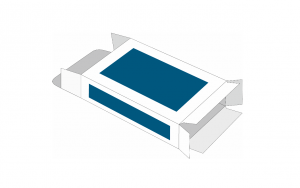
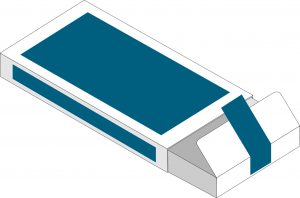
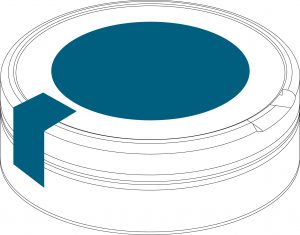
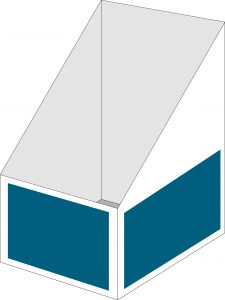
ATD labeling solutions support multiple labeling positions within the production process. Labels can be applied to the outside of any package like, tins, cartons or rigid packs, positioned across openings as sealing elements, or placed inside a box after opening. These positioning options allow labeling to be integrated precisely where it adds functional or regulatory value, while maintaining stable product handling and predictable machine behavior.
The examples below illustrate common label positioning possibilities within industrial labeling applications.


The role of labeling within industrial production environments
Labeling decisions influence far more than label placement alone. They affect how production lines are designed, how products flow through packaging stages and how information is captured and transferred throughout the supply chain. In regulated industries, labeling often represents the final checkpoint before a product can legally be distributed.
Modern industrial labeling must support:
- Compliance with national and international regulations
- Accurate product identification and traceability
- Consistent visual presentation across high volumes
- Reliable operation within high-speed production lines
- Integration with packaging, automation and data systems
When labeling fails, the consequences are rarely limited to a single process step. Incorrect or inconsistent labeling can lead to rejected products, halted shipments, rework, or regulatory exposure. For this reason, labeling systems must be engineered with the same level of discipline, predictability and robustness as core production equipment.
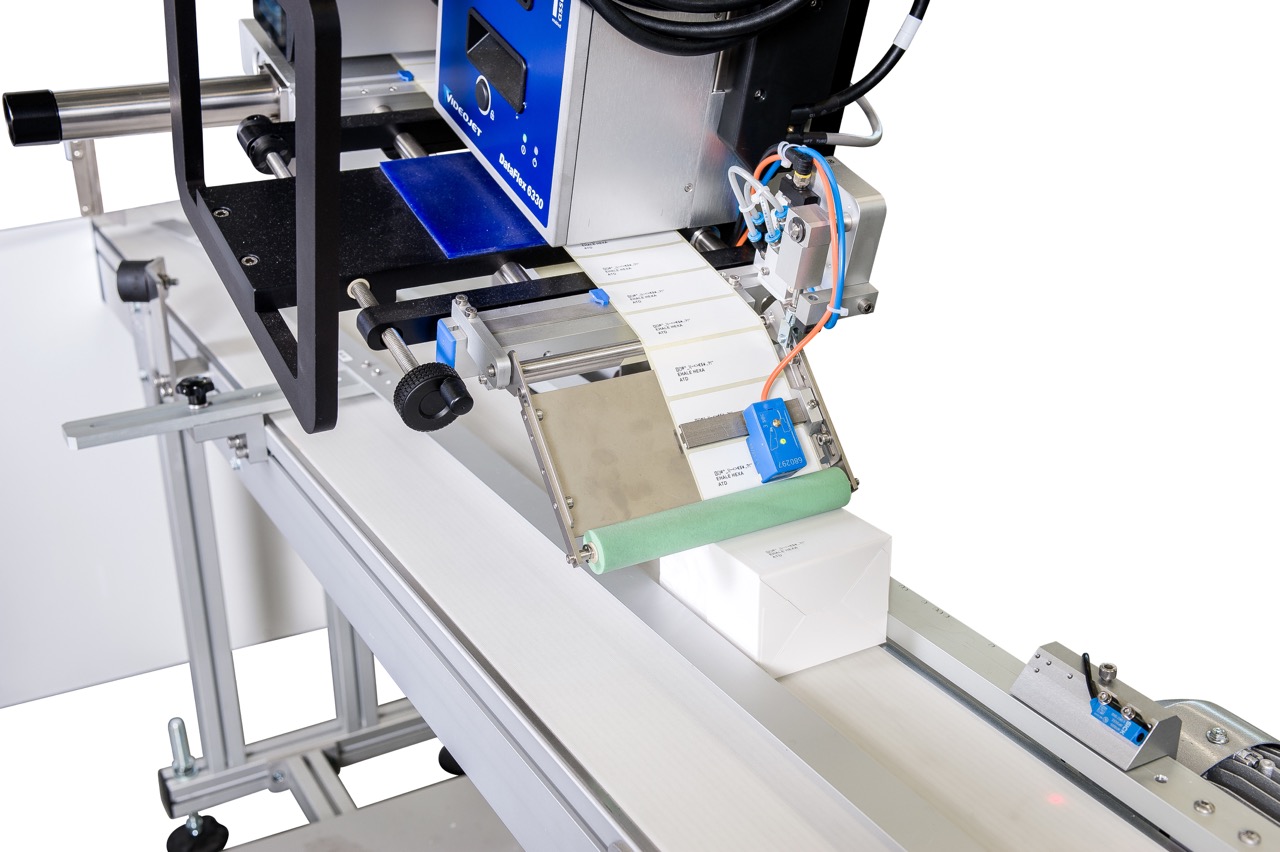
Labeling solutions and machine concepts in industrial environments
In industrial environments, labeling solutions range from standalone label machines to fully automated labeling machines integrated within complete production lines. The role of modern labeling solutions extends beyond applying labels alone; they must support compliance, traceability, data integrity and long-term production stability across industries.
Depending on the application, labeling may be performed by a dedicated label machine or by automated labeling machines integrated directly into packaging and automation systems. In both cases, stable interaction between machines is essential to avoid variability, misalignment or production interruptions.
This system-level view highlights why labeling must be approached as part of the overall production concept rather than as a single machine function.

Labeling shaped by regulated manufacturing realities
Industries such as tobacco, cosmetics and food operate under increasing regulatory demands. Labeling requirements vary per market, change over time and often involve strict verification and traceability obligations. Manufacturers must ensure that labeling systems can accommodate these requirements without disrupting production stability.
This reality has shifted labeling from a reactive function to a proactive design consideration. Labeling requirements now influence packaging formats, production line layout and data infrastructure from the earliest project stages. Systems that are not designed with this broader context in mind quickly become bottlenecks or sources of risk.
ATD Machinery and the foundations of labeling integration
ATD Machinery’s experience with labeling originates in the tobacco industry, one of the most demanding manufacturing and tax regulatory environments worldwide. Tobacco production combines fragile products, premium packaging formats and some of the strictest labeling and traceability regulations in existence.
Applications such as tax stamps, health warnings, environmental signing and track & trace identifiers must be applied with extreme precision and verified consistently. Even minimal deviations can result in non-compliant products and blocked market access. These conditions shaped ATD’s engineering approach early on: predictable motion, controlled handling and long-term mechanical stability.
As ATD expanded into cosmetics and food, this foundation proved directly transferable. While products and packaging formats differ, the underlying challenge remains the same: labeling must be accurate, compliant and stable without compromising production flow or product quality.

Engineering labeling for stability and predictability
Industrial labeling systems must perform reliably under real production conditions. Variations in speed, product formats and operating shifts require machines that behave consistently and remain controllable over time.
ATD labeling solutions are engineered around:
- Predictable mechanical motion for repeatable application
- Stable product handling throughout the labeling process
- Clear separation between product handling and mechanical systems
- Robust construction suitable for continuous industrial operation
Rather than relying on excessive complexity, labeling systems are designed to remain transparent in operation. This approach reduces operator dependency, simplifies maintenance and ensures consistent performance across long production runs.
Labeling as part of a unified production ecosystem
Labeling does not operate independently. Its performance is closely linked to upstream production stability and downstream packaging systems that ensure consistent product handling and presentation. For this reason, labeling must be designed as part of a unified production ecosystem.
ATD labeling solutions are developed to integrate seamlessly with:
- Packaging machines and carton handling systems
- Production solutions that stabilize product flow
- Automation solutions for grouping, transfer and robotic handling
When labeling, packaging and automation are aligned from the outset, production lines behave as coherent systems rather than collections of individual machines. Across industries, manufacturers increasingly rely on integrated labeling solutions rather than isolated label machines. Automated labeling machines engineered as part of the production ecosystem support higher reliability, improved compliance and better long-term scalability.
where regulation, product and production meet
Labeling across industries
While the fundamental principles of labeling remain consistent, implementation differs significantly across industries. Product characteristics, regulatory frameworks and production speeds all influence how labeling systems must be engineered.
ATD Machinery designs labeling solutions with deep understanding of these industry-specific realities, which are explored in more detail within our labeling applications across regulated manufacturing environments.

Labeling in tobacco production
Labeling in the tobacco industry is among the most complex and tightly regulated manufacturing applications worldwide. Products must comply with national and international legislation that often differs per market and evolves continuously.
Typical tobacco labeling requirements include:
- Tax stamp application
- Health warning labels
- Environmental signing
- Track & trace identifiers
- Authentication and anti-counterfeiting elements
- Integration with premium packaging formats
In tobacco production, labeling often includes using specialized tax stamp machines. These tax stamp machines support precise tax stamp application in accordance with national legislation, ensuring correct placement, verification and traceability. Errors at this stage can directly impact regulatory compliance and market access, making reliability essential.
Labeling in cosmetic manufacturing
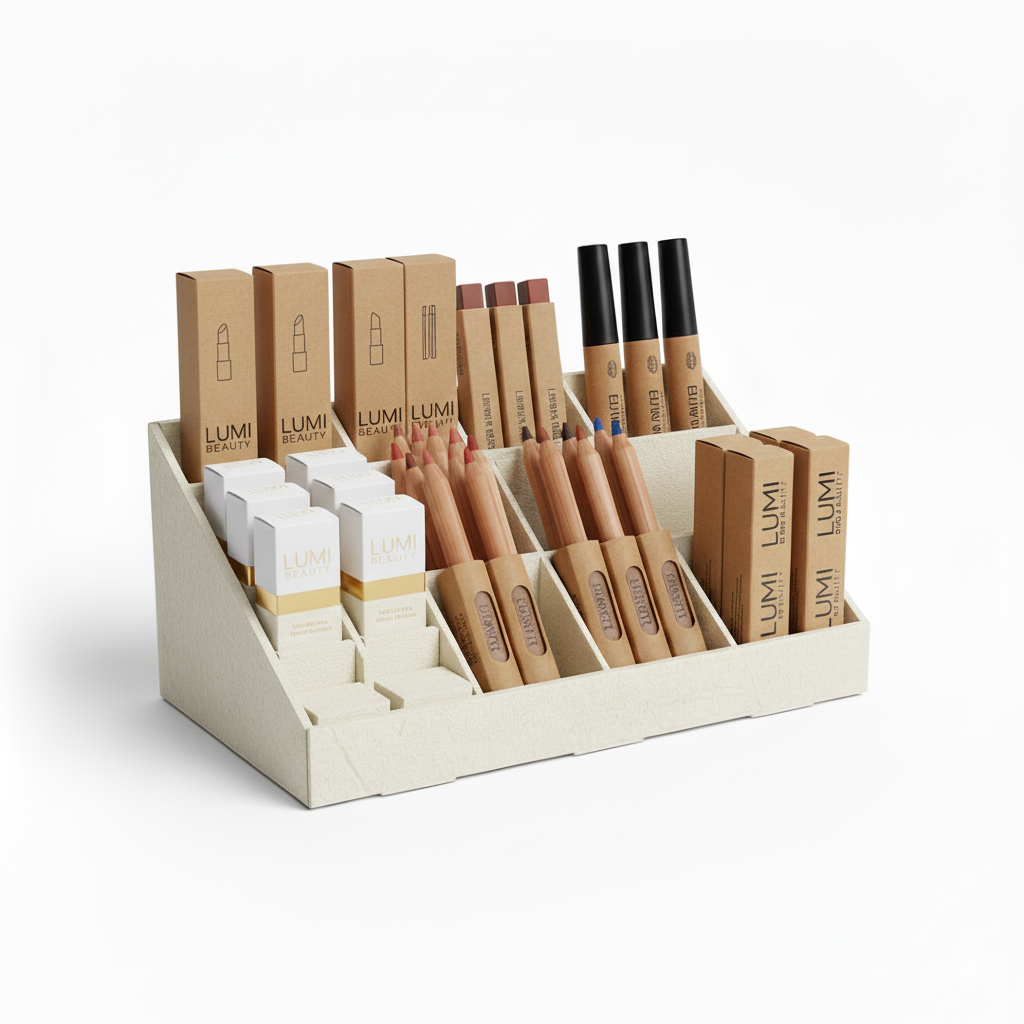
Cosmetic labeling operates at the intersection of regulation and brand presentation. Packaging and labeling quality directly influence consumer perception, making visual consistency essential.
Cosmetic labeling environments typically require:
- Product identification and ingredient information
- Compliance with international cosmetic regulations
- High visual accuracy and clean placement
- Integration with cosmetic packaging machines
- Support for premium and gift packaging formats (quality seals)
Cosmetic production often involves shorter runs and frequent format changes. Labeling systems must therefore combine visual consistency with flexibility, ensuring stable production performance across multiple product variations.
Labeling in food production environments
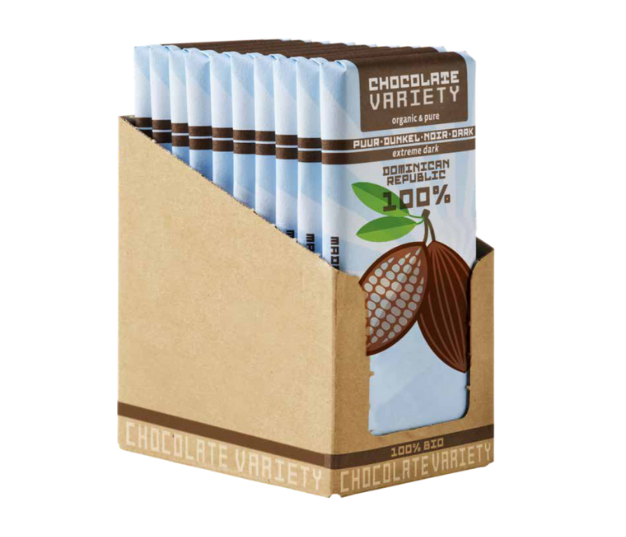
Food labeling combines speed, hygiene and compliance. Labels often carry essential information such as ingredients, allergens, expiry dates and batch identification, making accuracy critical.
Food labeling requirements commonly include:
- Product and ingredient labeling
- Allergen and regulatory information
- Date coding and batch identification
- Expiration date/ best use before
- Retail-ready and multipack labeling
- Integration with food packaging automation
ATD labeling solutions for food production are designed to operate reliably within high-speed environments while supporting hygienic operation and stable product flow.

Cross-industry and custom labeling applications
Beyond tobacco, cosmetics and food, many manufacturing environments face similar labeling challenges. Regulatory compliance, traceability, flexibility and long-term reliability are common requirements across industries.
ATD’s labeling solutions are adaptable to a wide range of products, packaging concepts and production environments. Custom labeling projects often require close alignment with packaging, automation and data systems. Cross-industry experience ensures that these solutions can be engineered with confidence.
Labeling as a long-term compliance foundation
Regulatory requirements continue to evolve worldwide. Labeling systems must therefore be designed not only for current legislation, but also for future compliance scenarios.
ATD’s labeling solutions are developed with:
- Adaptability to changing labeling regulations
- Compatibility with expanding traceability requirements
- Capacity for additional inspection or verification steps
- Structural robustness to support future upgrades
By approaching labeling as a long-term compliance foundation rather than a short-term solution, manufacturers reduce operational risk and protect market access over time.
Why manufacturers work with ATD Machinery for labeling
With decades of experience in regulated manufacturing environments, ATD Machinery delivers labeling solutions built on stability, integration and long-term performance. Systems are designed to operate reliably over long lifecycles, with strong attention to maintainability and total cost of ownership.
Manufacturers benefit from:
- Deep understanding of regulated production environments
- Seamless integration with packaging and automation
- Robust, service-friendly machine design
- Long-term support throughout the machine lifecycle