Automation solutions by ATD Machinery
Automation is at the core of modern manufacturing. It determines how efficiently products move through production, how consistently quality is maintained, and how flexibly companies can respond to changing market demands. At ATD Machinery, automation is not an isolated discipline. It is the foundation that connects production packaging and labeling into one integrated solution.
ATD designs and builds advanced automation machinery and integrated automation solutions for manufacturers who require precision, reliability, flexibility and long term performance. From high speed tobacco applications to cosmetic packaging automation and food processing or packaging automation, our systems are engineered to assure controlled movement, predictable logic and durable performance.
The philosophy Think. Build. Perform. defines how automation is approached. The full production environment is analyzed, robust systems are engineered and performance is validated in real operating conditions. The result is automation that supports long term manufacturing success rather than short term efficiency gains.
Automation at ATD is never about adding complexity. It is about creating clarity in processes, structure in movement and control in every step of the line.
What automation means in modern production
Automation in manufacturing refers to the controlled movement, handling and processing of products through mechanical and software driven systems. It replaces unpredictable manual handling with structured, repeatable and measurable processes.
Within ATD projects, automation can include product feeding, orientation, transfer, assembly, inspection, packaging integration and labeling synchronization. Each module is engineered as part of a larger production logic, not as a stand alone machine.
Effective automation delivers:
- Predictable product flow
- Data driven analysis
- Consistent product positioning
- Reduced human intervention
- Lower risk of product damage
- Stable output quality
- Scalable production capacity
However, automation only becomes valuable when it is designed around the specific product characteristics and production goals of the customer. That is where ATD distinguishes itself.
ATD Machinery: Engineering automation with purpose
ATD Machinery develops automation solutions for industries where precision and controlled handling are critical. A strong background in tobacco and related sectors has shaped a deep expertise in delicate product handling, excise compliance and high reliability requirements. Over time, this expertise has expanded into cosmetics, food and other consumer goods industries.
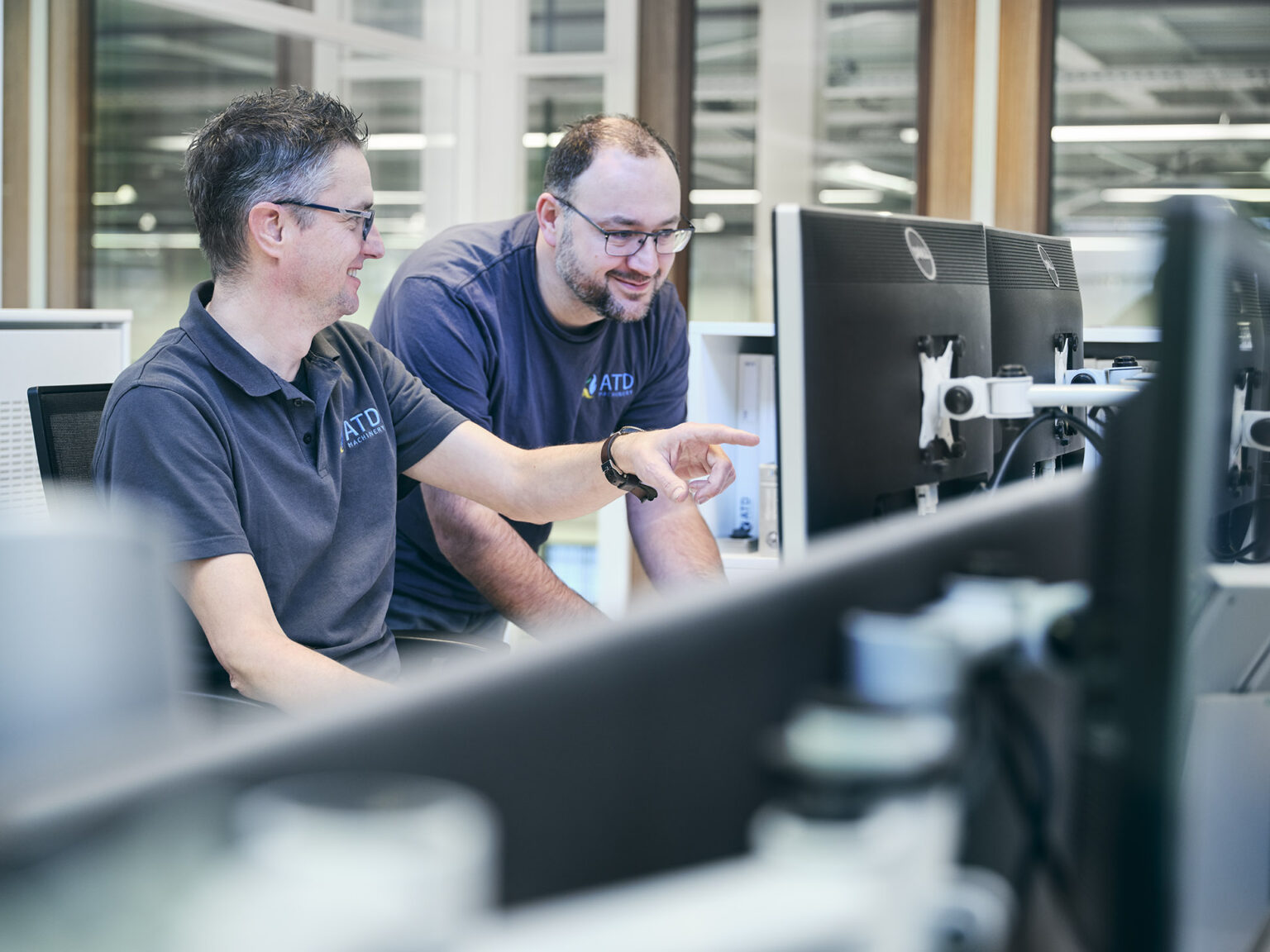
Every automation project starts with understanding:
- The physical characteristics of the product
- The required output capacity
- Regulatory requirements
- Integration with existing equipment
- Future scalability expectations
Automation is not limited to performing isolated tasks. It is engineered as a structured and controlled production flow.
Mechanical engineering, electrical engineering and software development are combined into one coherent system. This integrated approach ensures that machines communicate effectively, changeovers are logical and maintenance remains manageable.
How automation connects packaging, labeling and production
Automation forms the technical foundation within production machines, labeling machines and packaging machines. These machines are engineered as standalone solutions, yet they are designed to operate in direct connection with each other when required.
Production machines, labeling machines and packaging machines must function with synchronized timing, controlled positioning and predictable product transfer. Automation ensures that each machine performs its task with precision while remaining compatible with upstream and downstream equipment.
Rather than treating packaging, labeling and production as isolated processes, automation integrates them through structured control logic. This enables machines to operate independently or as part of a complete production line, depending on the customer’s requirements.
Automation within production solutions
In production environments, automation ensures that raw materials and semi finished products move accurately and predictably between process steps. This includes product forming, assembling, preparing or buffering before downstream handling. Stability at this stage is essential because any inconsistency in orientation, spacing or timing will affect packaging and labeling performance further along the line.
Within production solutions, automation provides:
- Controlled acceleration and deceleration to prevent product instability
- Accurate product spacing for consistent downstream processing
- Stable orientation control to prepare products for labeling or packaging
- Integrated quality checks to detect deviations early in the process
By regulating these variables, downstream processes receive products in a consistent and predictable condition. This reduces rejects, minimizes rework and supports overall line efficiency.
Production automation also enables scalability. Line speeds can be increased within defined parameters while maintaining stability, ensuring that capacity growth does not compromise product integrity.
Automation within packaging solutions
Packaging requires structured and reliable product handling. Many products are fragile, deformable or sensitive to pressure and vibration. In sectors such as cosmetics and food, presentation quality is directly linked to brand perception. Automation ensures that products are transferred into cartons, bundles or wrapping systems without mechanical stress or misalignment.
Automation in packaging focuses on:
- Smooth and continuous mechanical motion
- Collision free product transfer between modules
- Repeatable positioning inside packaging formats
- Precise synchronization with wrapping, cartoning or sealing units
By stabilizing product flow before it reaches the packaging stage, automation prevents irregular feeding, skewed placement or format inconsistencies. This creates predictable packaging performance across varying batch sizes and product variants.
Structured automation logic also supports efficient format changes. Packaging systems remain consistent because product infeed and transfer conditions are controlled and repeatable.
Automation within labeling solutions
Labeling processes demand high precision in positioning, orientation and adhesion. Whether applying tax stamps, excise seals, brand labels or regulatory information, the automation layer governs timing and alignment with exact accuracy.
Automation enables labeling machines to:
- Detect the exact product position before application
- Align labels with controlled orientation logic
- Maintain consistent application pressure for secure adhesion
- Synchronize label feed with defined line speeds
Accurate labeling depends on stable upstream product flow. Automation ensures that each product arrives at the labeling station in the correct position and at the correct moment. This prevents misapplication, reduces waste and supports regulatory compliance.
Integrated automation across production, packaging and labeling creates a continuous and controlled process flow. Each stage reinforces the next, resulting in a cohesive manufacturing system that delivers predictable output, consistent quality and scalable performance.
Flexible automation architecture
Automation machinery must remain adaptable as production requirements evolve over time. Variations in product dimensions, packaging formats or labeling specifications demand engineering solutions that can respond to change without requiring complete redesign. Flexibility within automation architecture ensures that machines can be adjusted to accommodate new product sizes, expanded packaging configurations or additional labeling functionality when necessary.
A structured mechanical layout combined with logical control systems makes it possible to implement modifications in a controlled and predictable manner. Instead of creating rigid systems that quickly become limited by format or output constraints, automation solutions are designed to allow measured adjustments in both hardware and software. This approach supports incremental capacity expansion, integration of complementary functions and process optimization through software updates.
Such flexibility protects long term investment value and ensures that automation machinery continues to perform effectively in dynamic and competitive production environments.
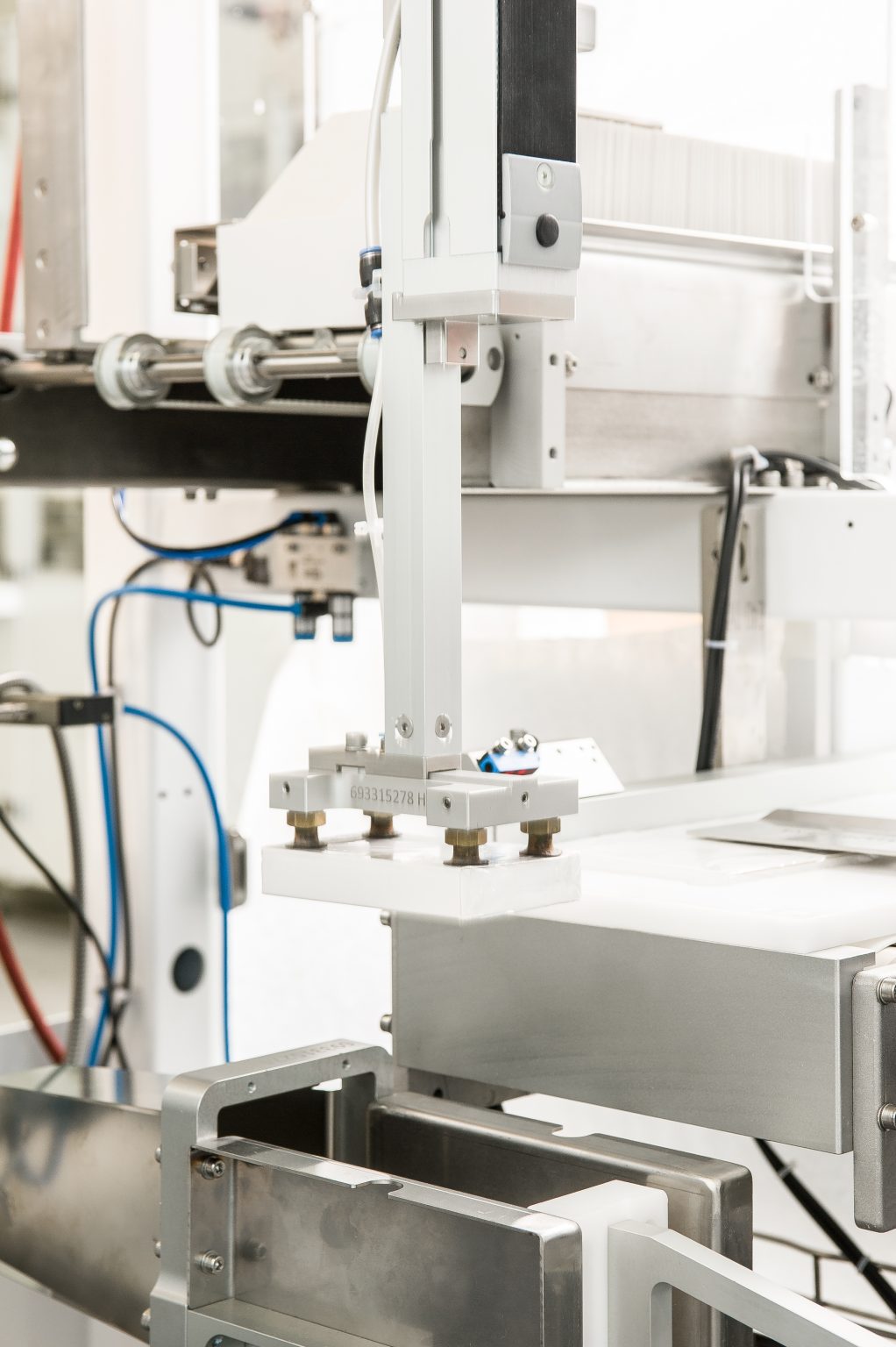
Changeover logic and production flexibility
Automation is not only about speed. It is about controlled adaptability. Many production challenges arise during format changes rather than during steady state production.
ATD integrates practical changeover logic into automation systems by:
- Designing accessible mechanical adjustments
• Structuring intuitive HMI interfaces, including possible process recipes
• Minimizing manual recalibration
• Reducing downtime during product switches
This results in automation solutions that support both efficiency and flexibility.
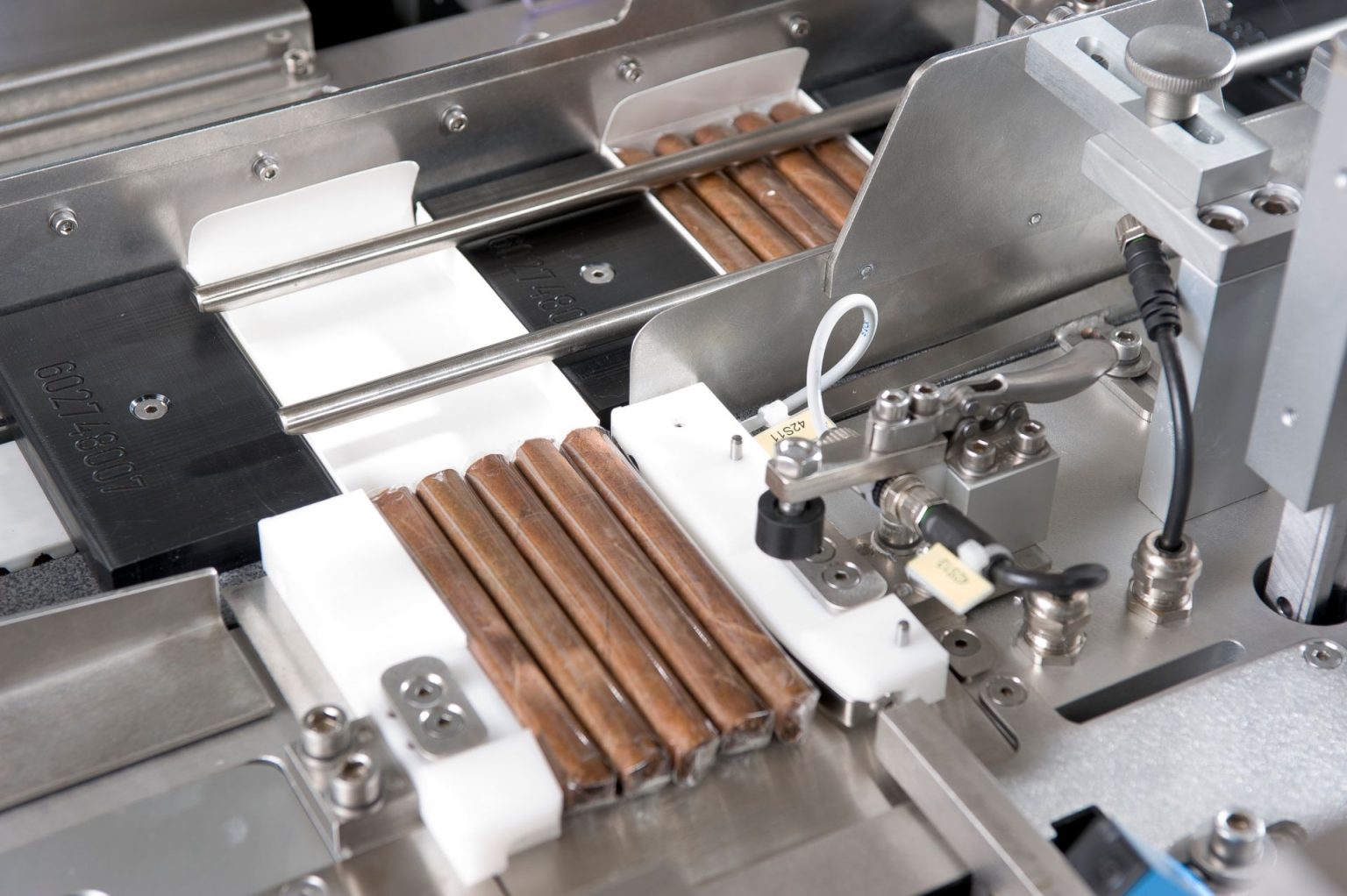
Controlled handling of delicate products
In industries such as tobacco and cosmetics, product presentation is critical. Automation must prevent scratches, deformation or misalignment.
ATD integrates gentle handling principles into its automation design. Mechanical paths are optimized to prevent abrupt movements. Contact surfaces are engineered to protect product integrity. Motion control systems ensure gradual transitions rather than sudden impacts.
The result is a balance between productivity and product care.
Integration and line synchronization
Automation at ATD is built around integration. Machines must communicate, not compete. Our systems are designed to synchronize with upstream and downstream equipment, whether supplied by ATD or third parties.
Integration includes:
- Centralized control systems
- Line speed synchronization
- Data exchange between modules
- Fault detection and controlled stopping sequences
By engineering the entire line logic, ATD prevents bottlenecks and ensures stable performance.
Think. Build. Perform.
Automation at ATD follows a structured philosophy. This methodology ensures that automation is not only technically advanced but also practically effective:
Think.
We analyze the production environment, define objectives and evaluate constraints.
Build.
We engineer and assemble automation systems that reflect these objectives.
Perform.
We test, validate and optimize performance to ensure long term reliability.
Long term performance and reliability
Automation is an investment. Reliability over time is more important than short term output peaks. ATD designs automation systems with durable components, structured layouts and clear maintenance access.
The focus on long term performance includes:
- Robust mechanical construction
- Clear cable routing and logical component placement
- Stable software architecture
- Preventive maintenance support
This results in machines that continue to perform consistently in demanding industrial environments.
Automation as a strategic production advantage
In competitive markets, automation determines whether production remains sustainable. Companies that rely on fragmented systems often face inefficiencies, downtime and quality variations. Integrated automation creates stability and control.
By combining automation with packaging, labeling and production competences, ATD Machinery delivers complete solutions rather than isolated equipment.
FAQ about Automation Machinery
What is automation machinery?
Automation machinery refers to production, packaging or labeling machines that integrate mechanical systems with intelligent control logic to perform structured and repeatable manufacturing processes.
What are automation solutions?
Automation solutions are engineered systems that combine machines, control software and mechanical handling to create stable and scalable production environments.
What is cosmetic packaging automation?
Cosmetic packaging automation involves automated handling and packaging of cosmetic products while maintaining presentation quality, precise positioning and consistent output.
What is food packaging automation?
Food packaging automation refers to automated packaging processes designed to ensure hygienic handling, stable product transfer and consistent sealing performance.
What is robotic packaging automation?
Robotic packaging automation integrates programmable robots into packaging machines to perform flexible pick and place, sorting and orientation tasks within a synchronized automation structure.
What is cosmetic labeling automation?
Cosmetic labeling automation ensures precise label application on cosmetic products through controlled positioning, accurate alignment and synchronized machine timing.
Can automation machinery integrate with existing machines?
Automation machinery can be engineered to operate independently or to integrate with existing production, packaging and labeling machines through structured control systems.
Automation at ATD Machinery
Automation at ATD Machinery is defined by structured engineering, controlled mechanical movement and intelligent control architecture. Production machines, packaging machines and labeling machines are developed with automation fully embedded within their design.
Automation solutions support standalone machine operation as well as integrated production lines. Through precise control, stable synchronization and flexible engineering, automation machinery enables consistent performance in demanding industrial environments.
Automation is not positioned as an abstract concept, but as the measurable intelligence within each machine that ensures predictable and scalable manufacturing results.
If you are looking to optimize your production flow, improve consistency or integrate packaging and labeling into a coherent automated line, ATD Machinery can support your next step toward controlled and scalable automation solutions.